Transcript
A wonderful story. The son of the great Tana Rebbe Yehoshua ben Levi, Rav Yosef, had a near death experience. Pesachim 50a, “And when he regained consciousness, his father said to him, ‘Son, what did you see?’ He said, ‘I saw an upside down world.'” Elyonim l’matah, the seemingly important people down at the bottom, v’tachtonim l’ma’alah, and those who were of low stature, they were sitting on top. Rebbe Yehoshua ben Levi said to his son, “Bni, my son, you saw the world of truth. You saw the way it really is.”
We live in the world of illusions. I’ve talked about this idea of the invisible enemy. The confusion in the world is exactly where the enemy wants us; in a state of fog. It’s not always the way you think. There are things that are beyond us. One of the tricks of getting out of this fog is to know that you’re in the fog.
I remember once going through a difficult time, and I went to one of my great teachers, Reb Tzvi Meir Zilberberg and he said to me, “Baruch, it says a fool walks in the dark.” The simple meaning is that a foolish person is walking in the dark. The deeper meaning, what he wanted to connotate to me is when it’s dark, don’t make a foolish decision to do something when you don’t have clarity, and believe me, he’s somebody to trust.
He was right. This world is the upside-down world. The tzaddikim want to give us clarity. They give us a glimpse into the world of truth. This term, elyonim l’matah, v’tachtonim l’ma’alah is a new door to higher consciousness. This is the concept of makifin, things that are beyond normal consciousness.
We saw this already in the story of the burial place of Moshe. The Gemara in Sota 13b talks about the Roman delegation that went to try and find the burial place of Moshe Rabbeinu. Why in the world did they want to find that kever, that holy place? Because they were the ones that destroyed the Beis Hamikdash, and they knew that this was the key to rebuilding of the Beis Hamikdash. And if the Jewish people would come there, Moshe would stand up in prayer and the Beis Hamikdash will be built. We talked about it already.
But I didn’t tell you the full story. When they got there, the tour guide says, “The kever is up there.” When they went up, it appeared that the burial place was at the bottom. So they went to the bottom. Then it appeared at the top. Then they split into two groups. The ones at the top said that it was at the bottom, and the ones at the bottom said it was at the top. This is another aspect that’s beyond perception. Even Moshe didn’t know where he was buried.
Rebbe Nachman teaches that also the Beis Hamikdash, the Tabernacle, is the aspect of the elyonim l’matah v’tachtonim l’ma’alah. Let’s learn it inside.
This particular conversation, 40 in Rebbe Nachman’s Wisdom, Sichos HaRan, was said during Chanukah, together with the teaching that I’ve quoted many times, Torah 7, in the second part of Likutei Moharan, “The merciful ones will be the leaders.”
The whole world is going in cycles and oscillating. The world is like a dreidel, a galgal hachozer, a rotating wheel. Why? Because all things emanate from one root. This is the secret of why we play dreidel on Chanukah.
The Rebbe explains, Chanukah is the aspect of the Holy Temple. The primary concept of the Temple is this idea of the revolving wheel. The Temple itself represents the idea of the superior below and the inferior above. Why? When Hashem lowers His divine presence into the Tabernacle, that’s the idea of the superior below. And on the other hand, the actual form of the physical building is engraved on high. That’s the aspect of the inferior above.
What’s even more important than this is the flipside. And this is what we’re getting to right now, and this is also connected to this week’s parsha. Human logic cannot explain how a moral human being can influence the higher worlds. All the more so, how an animal being sacrificed can raise up a sweet savor, giving pleasure to Hashem. However, Hashem, by placing His divine presence in the Temple and accepting the animals as sweet savor contradicts all philosophical logic.
This is the aspect, the tachtonim l’ma’alah. The physicality having an importance in the higher worlds. Rebbe Nachman is connecting the Gemara in Pesachim with the concept of the Beis Hamikdash. Just like the son of Rebbe Yehoshua ben Levi saw an upside down world, so too, the Beis Hamikdash is the aspect of elyonim l’matah, v’tachtonim l’ma’alah. This is the wisdom of unity. Knowing that at its source, everything is really one. The things that are on top, sometimes on the bottom; and the things that are on the bottom, sometimes are on top.
Our consciousness has been programmed by our society. Our society is a society of disinformation. It’s not telling you the truth. Only the Torah and the tzaddikim have the truth. Therefore, we have to open our minds to higher consciousness to believe that Hashem is bigger than we think. The tzaddikim shine da’as into the world and let us know the infinite mercy of the Creator. This is one of the greatest misconceptions of the world we live in. What happens when one transgresses, misses the mark? The nature of our relationship with our Creator is so fragile, we only need a small excuse to give up.
This is part of the drama of this week’s parsha, Shmini. Shmini, the eighth day, the eighth day of what? For seven days, the Tabernacle was erected and taken down because it didn’t work. Who was the Kohen Gadol? Moshe, our man of da’as, the perfect Kohen Gadol. Despite all of the work that the Jewish People put in. A tikkun, a rectification, for their transgression of the Golden Calf, the Tabernacle did not work. Moshe, all the toil that we went through for naught. We thought we were atoned.
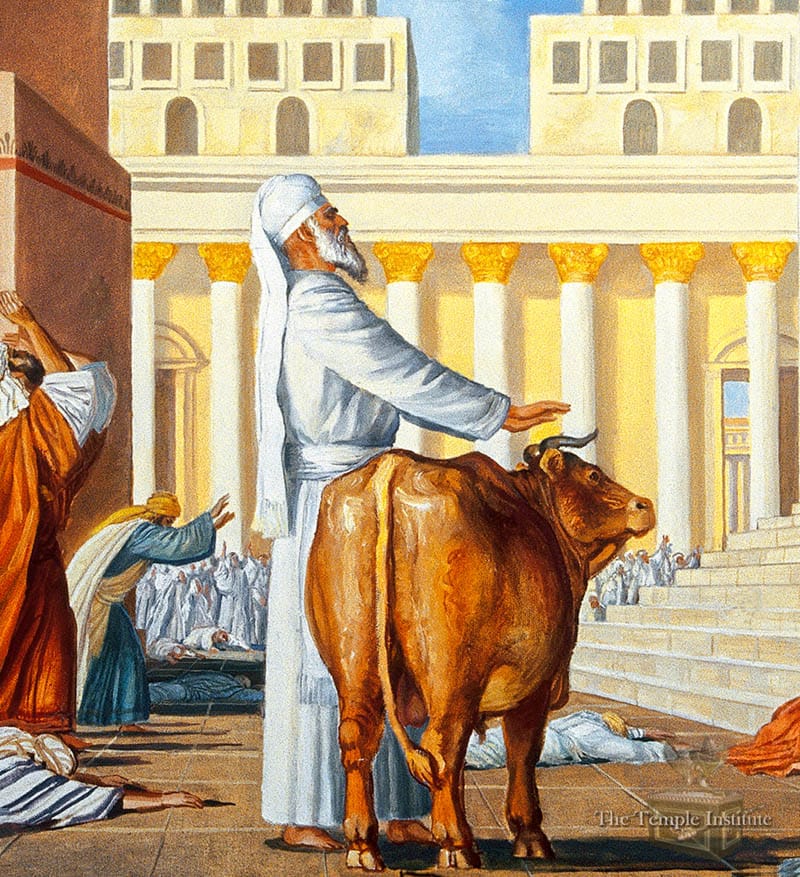
As it says, Mishkan haEidus, the Tabernacle of Testimony — testimony that Hashem forgave them for the Golden Calf, and it’s all for naught. It’s not working. And then Moshe called to Aharon, and he said take for you a calf. The Midrash says the same entity that caused the destruction, now will be the rectification, the tikkun. Only Hashem can bring about rectification through the same mode that a person transgressed. This is beyond our human intellect.
He said to Aharon, “krav el hamizbei’ach,” come close to the altar. Aharon was embarrassed. Why was Aharon embarrassed? Because he was the one that made the Golden Calf. “I’m a sinner. You want me to be the High Priest?” Year after year, the Sfas Emes calls Aharon the ba’al teshuva, the master of repentance. And it’s only through his humility that he can reconnect all of those people who have missed the mark.
Listen to the amazing words of the Sfas Emes. This is the difference between Moshe, who’s called the tzaddik gamur, and Aharon, who’s called the ba’al teshuva. As Chazal tell us, b’makom sheba’alei teshuva omdim, ein hatzaddikim yecholim la’amod. In the exalted, high, lofty place of the ba’al teshuva, even Moshe can’t stand. Why? Because the tzaddik, says the Sfas Emes, is standing in an exalted place. He’s always on the same level. On the other hand, a ba’al teshuva — sometimes he falls to the lowest of the lows, mima’amakim kerasicha Hashem. From the lowest of the lows I called out to you. But from that low place, he ascends to the highest of the highs.
So we see here, too, that Aharon, who is the aspect of the ba’al teshuva, is also the aspect of the tachtonim l’ma’alah. The ba’al teshuva appears to be inferior. In the world of truth, he’s really the highest of the highs.
The reason that the Jewish People do not have the Holy Temple is because we are not functioning on that level of consciousness. The minute that we pick up our consciousness, there’s a possibility of the Beis Hamikdash being brought into the world. That’s our goal. We want to show Hashem that we’re interested in the final and third Temple. We want it. We’re running after it. We’re trying to perceive it. We’re trying to bring it down.
This is the tikkun, this is the rectification. The problem is, we don’t have clarity. The problem is we don’t have da’as, the wisdom of unity. We want it. And all of those people that get it are going to be as if they built the Beis Hamikdash in their days. The more people that fill their minds with da’as, the closer we get to the Beis Hamikdash.